Last updated: November 12, 2026
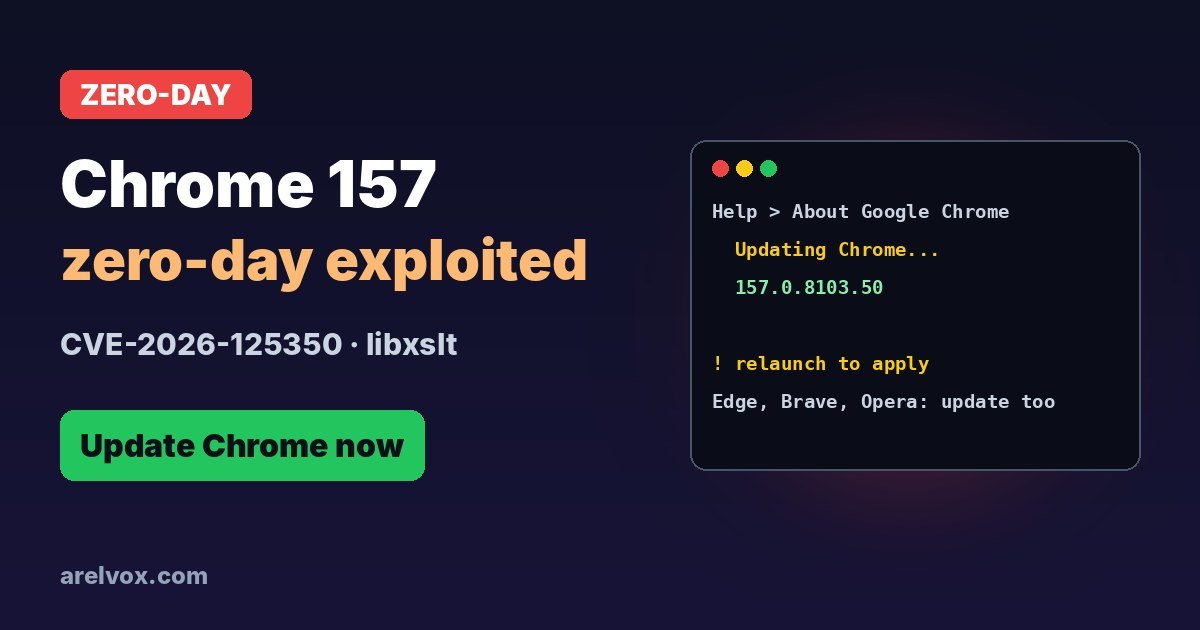
Another week, another Chrome zero-day. On November 10 Google pushed an update for a bug that attackers are already using. As usual the details are thin, but the advice is simple: update now and restart the browser.
What the Bug Is
CVE-2026-125350 is a use-after-free in libxslt, the library Chrome uses to transform XML documents with XSLT stylesheets. The flaw sits in a cache used for pattern matching. A specially crafted page can make the browser use memory after it was freed, which attackers can turn into code execution inside the renderer.
An anonymous researcher reported it on November 6, and Google says it is “aware that an exploit for CVE-2026-125350 exists in the wild.” Google has not said who is using it or against whom, which is normal until most users have updated.
Fixed Versions
| Platform | Fixed Chrome version |
|---|---|
| Windows | 157.0.8103.50 / .51 |
| macOS | 157.0.8103.50 / .51 |
| Linux | 157.0.8103.50 |
The same release fixes eight more bugs: another XML use-after-free, a V8 type confusion, a GPU out-of-bounds write, a buffer overflow in Compositing, incorrect authorization in FileSystem and three uninitialized GPU or WebGL resources.
How to Update
- Chrome on Windows and Mac: menu > Help > About Google Chrome, wait for the download, then click Relaunch.
- Edge, Brave, Opera, Vivaldi: open their “About” page to trigger an update. They are all Chromium based.
- Android: update Chrome from the Play Store.
- Linux and Raspberry Pi: update from your package manager.
sudo apt update
sudo apt upgrade   # chromium / google-chrome-stable
Tip: a downloaded update does nothing until Chrome restarts. If you keep dozens of tabs open for days, this is the moment to relaunch; Chrome reopens them.
Why It Matters
Browser zero-days are among the most valuable bugs for attackers because a single visit to a page can be enough. This is Chrome’s latest exploited bug in a busy year for the browser. If you also run Windows and Office, don’t miss this week’s Patch Tuesday with an exploited Outlook zero-day.
Frequently Asked Questions
What is CVE-2026-125350?
A use-after-free bug in libxslt, the library Chrome uses for XSLT transformations of XML documents. Google says an exploit for it exists in the wild. A malicious page could use it to corrupt memory and possibly run code inside the browser.
Which Chrome version fixes it?
Chrome 157.0.8103.50 or .51 on Windows and macOS, and 157.0.8103.50 on Linux.
How do I update Chrome?
Open the menu, go to Help > About Google Chrome, let it download the update, then click Relaunch. The fix does not protect you until the browser restarts.
Are Edge, Brave and Opera affected?
They are based on Chromium and use the same code, so they usually need the same fix. Their vendors normally ship it within a few days; check for updates in each browser.
How do I update Chromium on Linux?
On Debian, Ubuntu and Raspberry Pi OS, run sudo apt update and sudo apt upgrade. On Raspberry Pi OS the browser package is called chromium.
5 thoughts on “Chrome 157 Fixes Zero-Day CVE-2026-125350 Exploited in the Wild: Update Now”